Automotive

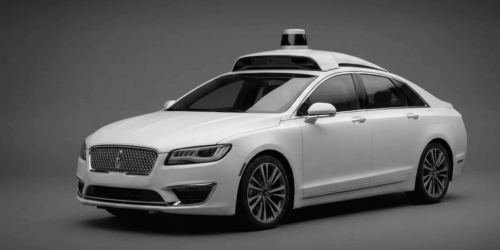
How Lenovo is scaling Level 4 autonomous robotaxis on Arm

This blog post was originally published at Arm’s website. It is reprinted here with the permission of Arm. As L4 robotaxis shift from pilot to production, Arm offers the compute foundation needed to deliver end-to-end physical AI that scales across vehicle fleets. After years of autonomous driving pilots and controlled trials, the automotive industry is moving toward the production-scale deployment of Level 4 (L4) robotaxis. This marks […]

How Lenovo is scaling Level 4 autonomous robotaxis on Arm Read More +

What Does a GPU Have to Do With Automotive Security?

This blog post was originally published at Imagination Technologies’ website. It is reprinted here with the permission of Imagination Technologies. The automotive industry is undergoing the most significant transformation since the advent of electronics in cars. Vehicles are becoming software-defined, connected, AI-driven, and continuously updated. This evolution brings extraordinary new capability – but it also brings

What Does a GPU Have to Do With Automotive Security? Read More +

Accelerating next-generation automotive designs with the TDA5 Virtualizer™ Development Kit

This blog post was originally published at Texas Instruments’ website. It is reprinted here with the permission of Texas Instruments. Introduction Continuous innovation in high-performance, power-efficient systems-on-a-chip (SoCs) is enabling safer, smarter and more autonomous driving experiences in even more vehicles. As another big step forward, Texas Instruments and Synopsys developed a Virtualizer Development Kit™ (VDK) for the

Accelerating next-generation automotive designs with the TDA5 Virtualizer™ Development Kit Read More +

Into the Omniverse: OpenUSD and NVIDIA Halos Accelerate Safety for Robotaxis, Physical AI Systems

This blog post was originally published at NVIDIA’s website. It is reprinted here with the permission of NVIDIA. NVIDIA Editor’s note: This post is part of Into the Omniverse, a series focused on how developers, 3D practitioners and enterprises can transform their workflows using the latest advancements in OpenUSD and NVIDIA Omniverse. New NVIDIA safety

Into the Omniverse: OpenUSD and NVIDIA Halos Accelerate Safety for Robotaxis, Physical AI Systems Read More +

What Sensor Fusion Architecture Offers for NVIDIA Orin NX-Based Autonomous Vision Systems

This blog post was originally published at e-con Systems’ website. It is reprinted here with the permission of e-con Systems. Key Takeaways Why multi-sensor timing drift weakens edge AI perception How GNSS-disciplined clocks align cameras, LiDAR, radar, and IMUs Role of Orin NX as a central timing authority for sensor fusion Operational gains from unified time-stamping

What Sensor Fusion Architecture Offers for NVIDIA Orin NX-Based Autonomous Vision Systems Read More +

Driving the Future of Automotive AI: Meet RoX AI Studio

This blog post was originally published at Renesas’ website. It is reprinted here with the permission of Renesas. In today’s automotive industry, onboard AI inference engines drive numerous safety-critical Advanced Driver Assistance Systems (ADAS) features, all of which require consistent, high-performance processing. Given that AI model engineering is inherently iterative (numerous cycles of ‘train, validate, and

Driving the Future of Automotive AI: Meet RoX AI Studio Read More +

Why Scalable High-Performance SoCs are the Future of Autonomous Vehicles

This blog post was originally published at Texas Instruments’ website. It is reprinted here with the permission of Texas Instruments. Summary The automotive industry is ascending to higher levels of vehicle autonomy with the help of central computing platforms. SoCs like the TDA5 family offer safe, efficient AI performance through an integrated C7™ NPU and

Why Scalable High-Performance SoCs are the Future of Autonomous Vehicles Read More +

How to Enhance 3D Gaussian Reconstruction Quality for Simulation

This article was originally published at NVIDIA’s website. It is reprinted here with the permission of NVIDIA. Building truly photorealistic 3D environments for simulation is challenging. Even with advanced neural reconstruction methods such as 3D Gaussian Splatting (3DGS) and 3D Gaussian with Unscented Transform (3DGUT), rendered views can still contain artifacts such as blurriness, holes, or

How to Enhance 3D Gaussian Reconstruction Quality for Simulation Read More +

Quadric’s SDK Selected by TIER IV for AI Processing Evaluation and Optimization, Supporting Autoware Deployment in Next-Generation Autonomous Vehicles

Quadric today announced that TIER IV, Inc., of Japan has signed a license to use the Chimera AI processor SDK to evaluate and optimize future iterations of Autoware, open-source software for autonomous driving pioneered by TIER IV. Burlingame, CA, January 14, 2026 – Quadric today announced that TIER IV, Inc., of Japan has signed a

Quadric’s SDK Selected by TIER IV for AI Processing Evaluation and Optimization, Supporting Autoware Deployment in Next-Generation Autonomous Vehicles Read More +

Qualcomm Drives the Future of Mobility with Strong Snapdragon Digital Chassis Momentum and Agentic AI for Major Global Automakers Worldwide

Key Takeaways: Qualcomm extends its automotive leadership with new collaborations, including Google, to power next‑gen software‑defined vehicles and agentic AI‑driven personalization. Snapdragon Ride and Cockpit Elite Platforms, and Snapdragon Ride Flex SoC, see rapid adoption, adding new design-wins and delivering the industry’s first commercialized mixed‑criticality platform that integrates cockpit, advanced driver‑assistance systems, and end‑to‑end AI. Decade of in-vehicle infotainment

Qualcomm Drives the Future of Mobility with Strong Snapdragon Digital Chassis Momentum and Agentic AI for Major Global Automakers Worldwide Read More +

Here you’ll find a wealth of practical technical insights and expert advice to help you bring AI and visual intelligence into your products without flying blind.

Contact

Address

Berkeley Design Technology, Inc.
PO Box #4446
Walnut Creek, CA 94596

Phone
Phone: +1 (925) 954-1411
Scroll to Top