

On-Device LLMs in 2026: What Changed, What Matters, What’s Next
In On-Device LLMs: State of the Union, 2026, Vikas Chandra and Raghuraman Krishnamoorthi explain why running LLMs on phones has moved from novelty to practical engineering, and why the biggest breakthroughs came not from faster
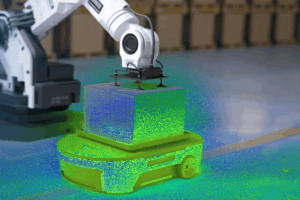
Faster Sensor Simulation for Robotics Training with Machine Learning Surrogates
This article was originally published at Analog Devices’ website. It is reprinted here with the permission of Analog Devices. Training robots in the physical world is slow, expensive, and difficult to scale. Roboticists developing AI policies

Voyager SDK v1.5.3 is Live, and That Means Ultralytics YOLO26 Support
Voyager v1.5.3 dropped, and Ultralytics YOLO26 support is the big headline here. If you’ve been following Ultralytics’ releases, you’ll know Ultralytics YOLO26 is specifically engineered for edge devices like Axelera’s Metis hardware. Why Ultralytics YOLO26 matters for your

Upcoming Webinar on Challenges of Depth of Field (DoF) in Macro Imaging
On January 29, 2026, at 9:00 am PST (12:00 pm EST) Alliance Member company e-con Systems will deliver a webinar “Challenges of Depth of Field (DoF) in Macro Imaging” From the event page: We’re excited

How Edge Computing In Retail Is Transforming the Shopping Experience
Forward-looking retailers are increasingly relying on an in-store combination of data collection through IoT devices with various types of sensors, AI for decisions and transactions on live data, and digital signage to communicate results and

Free Webinar Highlights Compelling Advantages of FPGAs
On March 17, 2026 at 9 am PT (noon ET), Efinix’s Mark Oliver, VP of Marketing and Business Development, will present the free hour webinar “Why your Next AI Accelerator Should Be an FPGA,” organized

Meet MIPS S8200: Real-Time, On-Device AI for the Physical World
This blog post was originally published at MIPS’s website. It is reprinted here with the permission of MIPS. Physical AI is the ability for machines to sense their environment, think locally, act safely, and communicate

The Next Platform Shift: Physical and Edge AI, Powered by Arm
This blog post was originally published at Arm’s website. It is reprinted here with the permission of Arm. The Arm ecosystem is taking AI beyond the cloud and into the real-world As CES 2026 opens, a common thread quickly

Why DRAM Prices Keep Rising in the Age of AI
This market analysis was originally published at the Yole Group’s website. It is reprinted here with the permission of the Yole Group. As hyperscale data centers rewrite the rules of the memory market, shortages

The Forest Listener: Where edge AI meets the wild
This blog post was originally published at Micron’s website. It is reprinted here with the permission of Micron. Let’s first discuss the power of enabling. Enabling a wide electronic ecosystem is essential for fostering innovation, scalability and resilience across industries. By supporting diverse hardware, software and connectivity standards, organizations can accelerate product development, reduce costs and

How Lenovo is scaling Level 4 autonomous robotaxis on Arm
This blog post was originally published at Arm’s website. It is reprinted here with the permission of Arm. As L4 robotaxis shift from pilot to production, Arm offers the compute foundation needed to deliver end-to-end physical AI that scales across vehicle fleets. After years of autonomous driving pilots and controlled trials, the automotive industry is moving toward the production-scale deployment of Level 4 (L4) robotaxis. This marks

What Does a GPU Have to Do With Automotive Security?
This blog post was originally published at Imagination Technologies’ website. It is reprinted here with the permission of Imagination Technologies. The automotive industry is undergoing the most significant transformation since the advent of electronics in cars. Vehicles are becoming software-defined, connected, AI-driven, and continuously updated. This evolution brings extraordinary new capability – but it also brings
The Forest Listener: Where edge AI meets the wild
This blog post was originally published at Micron’s website. It is reprinted here with the permission of Micron. Let’s first discuss the power of enabling. Enabling a wide electronic ecosystem is essential for fostering innovation, scalability and resilience across industries. By supporting diverse hardware, software and connectivity standards, organizations can accelerate product development, reduce costs and
How Lenovo is scaling Level 4 autonomous robotaxis on Arm
This blog post was originally published at Arm’s website. It is reprinted here with the permission of Arm. As L4 robotaxis shift from pilot to production, Arm offers the compute foundation needed to deliver end-to-end physical AI that scales across vehicle fleets. After years of autonomous driving pilots and controlled trials, the automotive industry is moving toward the production-scale deployment of Level 4 (L4) robotaxis. This marks
What Does a GPU Have to Do With Automotive Security?
This blog post was originally published at Imagination Technologies’ website. It is reprinted here with the permission of Imagination Technologies. The automotive industry is undergoing the most significant transformation since the advent of electronics in cars. Vehicles are becoming software-defined, connected, AI-driven, and continuously updated. This evolution brings extraordinary new capability – but it also brings
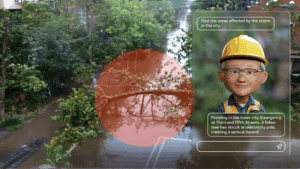
AI On: 3 Ways to Bring Agentic AI to Computer Vision Applications
This blog post was originally published at NVIDIA’s website. It is reprinted here with the permission of NVIDIA. Learn how to integrate vision language models into video analytics applications, from AI-powered search to fully automated video analysis. Today’s computer vision systems excel at identifying what happens in physical spaces and processes, but lack the abilities to explain the

SAM3: A New Era for Open‑Vocabulary Segmentation and Edge AI
Quality training data – especially segmented visual data – is a cornerstone of building robust vision models. Meta’s recently announced Segment Anything Model 3 (SAM3) arrives as a potential game-changer in this domain. SAM3 is a unified model that can detect, segment, and even track objects in images and videos using both text and visual
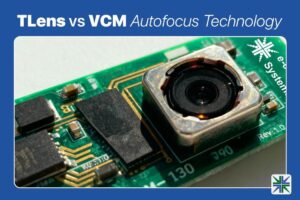
TLens vs VCM Autofocus Technology
This blog post was originally published at e-con Systems’ website. It is reprinted here with the permission of e-con Systems. In this blog, we’ll walk you through how TLens technology differs from traditional VCM autofocus, how TLens combined with e-con Systems’ Tinte ISP enhances camera performance, key advantages of TLens over mechanical autofocus systems, and applications