
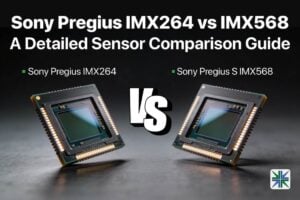
Sony Pregius IMX264 vs. IMX568: A Detailed Sensor Comparison Guide
This blog post was originally published at e-con Systems’ website. It is reprinted here with the permission of e-con Systems. The image sensor is an important component in defining the camera’s image quality. Many real-world applications

What Happens When the Inspection AI Fails: Learning from Production Line Mistakes
This blog post was originally published at Lincode’s website. It is reprinted here with the permission of Lincode. Studies show that about 34% of manufacturing defects are missed because inspection systems make mistakes.[1] These numbers show a
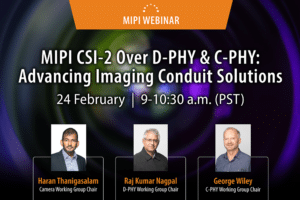
Upcoming Webinar on CSI-2 over D-PHY & C-PHY
On February 24, 2026, at 9:00 am PST (12:00 pm EST) MIPI Alliance will deliver a webinar “MIPI CSI-2 over D-PHY & C-PHY: Advancing Imaging Conduit Solutions” From the event page: MIPI CSI-2®, together with

What’s New in MIPI Security: MIPI CCISE and Security for Debug
This blog post was originally published at MIPI Alliance’s website. It is reprinted here with the permission of MIPI Alliance. As the need for security becomes increasingly more critical, MIPI Alliance has continued to broaden its

Production-Ready, Full-Stack Edge AI Solutions Turn Microchip’s MCUs and MPUs Into Catalysts for Intelligent Real-Time Decision-Making
Chandler, Ariz., February 10, 2026 — A major next step for artificial intelligence (AI) and machine learning (ML) innovation is moving ML models from the cloud to the edge for real-time inferencing and decision-making applications in

Accelerating next-generation automotive designs with the TDA5 Virtualizer™ Development Kit
This blog post was originally published at Texas Instruments’ website. It is reprinted here with the permission of Texas Instruments. Introduction Continuous innovation in high-performance, power-efficient systems-on-a-chip (SoCs) is enabling safer, smarter and more autonomous driving

Into the Omniverse: OpenUSD and NVIDIA Halos Accelerate Safety for Robotaxis, Physical AI Systems
This blog post was originally published at NVIDIA’s website. It is reprinted here with the permission of NVIDIA. NVIDIA Editor’s note: This post is part of Into the Omniverse, a series focused on how developers,
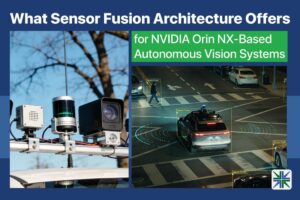
What Sensor Fusion Architecture Offers for NVIDIA Orin NX-Based Autonomous Vision Systems
This blog post was originally published at e-con Systems’ website. It is reprinted here with the permission of e-con Systems. Key Takeaways Why multi-sensor timing drift weakens edge AI perception How GNSS-disciplined clocks align cameras, LiDAR,
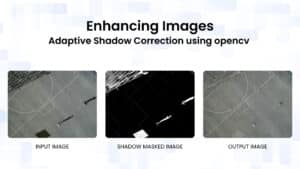
Enhancing Images: Adaptive Shadow Correction Using OpenCV
This blog post was originally published at OpenCV’s website. It is reprinted here with the permission of OpenCV. Imagine capturing the perfect landscape photo on a sunny day, only to find harsh shadows obscuring key

The Forest Listener: Where edge AI meets the wild
This blog post was originally published at Micron’s website. It is reprinted here with the permission of Micron. Let’s first discuss the power of enabling. Enabling a wide electronic ecosystem is essential for fostering innovation, scalability and resilience across industries. By supporting diverse hardware, software and connectivity standards, organizations can accelerate product development, reduce costs and

How Lenovo is scaling Level 4 autonomous robotaxis on Arm
This blog post was originally published at Arm’s website. It is reprinted here with the permission of Arm. As L4 robotaxis shift from pilot to production, Arm offers the compute foundation needed to deliver end-to-end physical AI that scales across vehicle fleets. After years of autonomous driving pilots and controlled trials, the automotive industry is moving toward the production-scale deployment of Level 4 (L4) robotaxis. This marks

What Does a GPU Have to Do With Automotive Security?
This blog post was originally published at Imagination Technologies’ website. It is reprinted here with the permission of Imagination Technologies. The automotive industry is undergoing the most significant transformation since the advent of electronics in cars. Vehicles are becoming software-defined, connected, AI-driven, and continuously updated. This evolution brings extraordinary new capability – but it also brings
The Forest Listener: Where edge AI meets the wild
This blog post was originally published at Micron’s website. It is reprinted here with the permission of Micron. Let’s first discuss the power of enabling. Enabling a wide electronic ecosystem is essential for fostering innovation, scalability and resilience across industries. By supporting diverse hardware, software and connectivity standards, organizations can accelerate product development, reduce costs and
How Lenovo is scaling Level 4 autonomous robotaxis on Arm
This blog post was originally published at Arm’s website. It is reprinted here with the permission of Arm. As L4 robotaxis shift from pilot to production, Arm offers the compute foundation needed to deliver end-to-end physical AI that scales across vehicle fleets. After years of autonomous driving pilots and controlled trials, the automotive industry is moving toward the production-scale deployment of Level 4 (L4) robotaxis. This marks
What Does a GPU Have to Do With Automotive Security?
This blog post was originally published at Imagination Technologies’ website. It is reprinted here with the permission of Imagination Technologies. The automotive industry is undergoing the most significant transformation since the advent of electronics in cars. Vehicles are becoming software-defined, connected, AI-driven, and continuously updated. This evolution brings extraordinary new capability – but it also brings

AI On: 3 Ways to Bring Agentic AI to Computer Vision Applications
This blog post was originally published at NVIDIA’s website. It is reprinted here with the permission of NVIDIA. Learn how to integrate vision language models into video analytics applications, from AI-powered search to fully automated video analysis. Today’s computer vision systems excel at identifying what happens in physical spaces and processes, but lack the abilities to explain the

SAM3: A New Era for Open‑Vocabulary Segmentation and Edge AI
Quality training data – especially segmented visual data – is a cornerstone of building robust vision models. Meta’s recently announced Segment Anything Model 3 (SAM3) arrives as a potential game-changer in this domain. SAM3 is a unified model that can detect, segment, and even track objects in images and videos using both text and visual
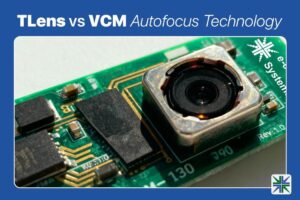
TLens vs VCM Autofocus Technology
This blog post was originally published at e-con Systems’ website. It is reprinted here with the permission of e-con Systems. In this blog, we’ll walk you through how TLens technology differs from traditional VCM autofocus, how TLens combined with e-con Systems’ Tinte ISP enhances camera performance, key advantages of TLens over mechanical autofocus systems, and applications